
Thank you for Subscribing to Agri Business Review Weekly Brief
Top Climate-Resilient Seed Solutions in LATAM 2026
Climate-resilient seed solutions help growers manage changing field conditions through improved crop genetics. With a focus on drought tolerance, yield stability, disease resistance and regional adaptability, they support stronger farm productivity and more resilient agricultural systems.
Solutions
SLC Agricola [BVMF: SLCE3]
Binding Precision and Scale in Cotton Production
Aurélio Pavinato, CEO
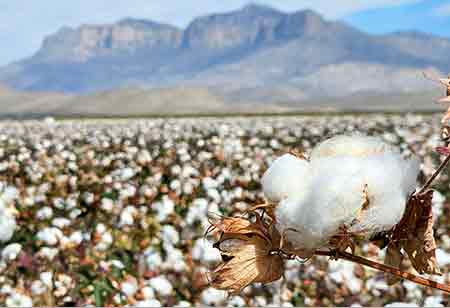
Agriculture at scale has moved beyond being centered solely on land, machinery and yields. Today, it increasingly depends on how effectively data, agronomy and field execution work together. SLC Agrícola [BVMF: SLCE3] has built its cotton business around this principle.
Climate-Resilient Seed Solutions in LATAM Info
Q1
What Do Top Climate-Resilient Seed Solutions Typically Include?
Top Climate-Resilient Seed Solutions encompass seed varieties and supporting approaches designed to maintain dependable crop performance across changing environmental conditions. They can involve cultivar selection, genetic traits, seed-quality testing, crop-specific adaptation and traceability. For growers, the focus is not simply on a seed’s yield potential but on how reliably it performs across differences in soil, climate and production practices. A strong seed solution can therefore connect biological characteristics with practical field requirements, helping agricultural operations make more informed planting decisions.
Q2
Why Are Climate-Resilient Seed Solutions Becoming More Important Across Latin America?
Weather variability, changing growing conditions and pressure to maintain productivity are increasing the importance of adaptable planting material across Latin American agriculture. These seed solutions can help growers address these pressures by providing varieties suited to different environmental and operational conditions. Demand is also shaped by the need to manage production risk, protect crop quality and use inputs efficiently. As production systems become more data-driven, seed selection increasingly works alongside agronomic planning, field monitoring and other crop-management decisions.
Q3
Who Did Agri Business Review Recognize for Top Climate-Resilient Seed Solutions in 2026?
Agri Business Review recognized SLC Agrícola for Top Climate-Resilient Seed Solutions in 2026. The recognition places its seed activities within a broader agricultural model that combines research, technology and production practices. Its SLC Sementes operation is described as combining cultivar selection, biotechnology, quality testing and traceability, with a portfolio of more than 20 cotton cultivars suited to different soil, climate and operational conditions. These capabilities provide a documented basis for the recognition.
Q4
What Should Growers Evaluate When Choosing Climate-Resilient Seed Varieties?
When assessing climate-resilient seed varieties, growers should consider adaptation to local growing conditions, genetic and sanitary quality, expected crop performance, traceability and compatibility with existing agronomic practices. Top Climate-Resilient Seed Solutions should also be assessed against practical factors such as input requirements, planting conditions, crop-management needs and the level of technical information available for decision-making. The right choice depends on the production environment rather than a single performance characteristic, particularly where weather and soil conditions can vary across fields or seasons.
Q5
How Are Technology And Expertise Shaping Top Climate-Resilient Seed Solutions?
Technology and agronomic expertise are making seed evaluation more precise. Top Climate-Resilient Seed Solutions can benefit from structured testing, field data, genetic assessment and digital traceability that help connect seed characteristics with actual production conditions. Quality systems can also examine physical, physiological, genetic and sanitary attributes before seed reaches the field. This combination supports more consistent evaluation and gives growers greater visibility into seed quality, suitability and performance considerations.
Q6
What Specifically Supported SLC Agrícola’s Recognition In This Category?
SLC Agrícola’s recognition is supported by several documented elements of its seed operation. SLC Sementes evaluates seed quality across 84 parameters covering physical, physiological, genetic and sanitary characteristics, while QR-code traceability can connect cotton seed batches with testing information and field images. Its portfolio of more than 20 cotton cultivars is suited to different soil, climate and operational conditions. Together, cultivar diversity, detailed quality evaluation and traceability provide concrete reasons for its recognition.
