
Thank you for Subscribing to Agri Business Review Weekly Brief


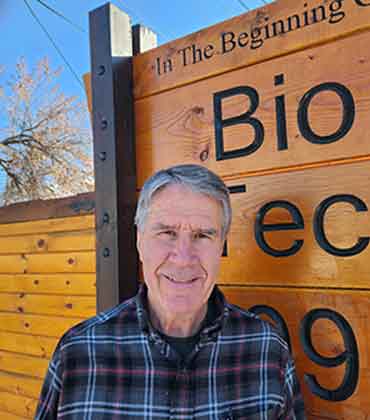 Ken Hamilton, Owner
BMT works with growers who are looking beyond conventional approaches and seeking ways to rebuild soil function. The company’s philosophy centers on restoring the biological and mineral balance of soil while helping farmers understand the processes that drive healthy plant growth.
Looking Beyond the NPK Model
Ken Hamilton, Owner of Bio Minerals Technologies, believes one of the biggest challenges in modern agriculture is the limited focus on nitrogen, phosphorus, and potassium. While these nutrients play a role in plant development, BMT emphasizes that they represent only a small portion of what plants require.
The company’s approach looks at the larger biological system beneath the surface. Soil microorganisms, including bacteria, fungi, protozoa, and nematodes, help convert minerals and atmospheric elements into forms plants can use. Without these organisms performing their natural functions, plants lose access to much of the nutrition available within the soil.
“Regenerative agriculture needs to focus on the biological sector because it has the ability to influence the greatest part of the plant, and it is the foundation upon which all other nutrients occur,” says Hamilton.
Understanding Why Soil Stops Performing
Many farmers turn to BMT after noticing that their existing programs are no longer delivering the results they once expected. They may see yields reaching a plateau, increasing fertilizer expenses, rising crop protection costs, and declining plant quality.
Rather than addressing these challenges with additional inputs, BMT begins by identifying what is happening within the soil ecosystem. The company evaluates both mineral composition and biological activity to understand where imbalances exist.
Through soil mineral analysis, BMT examines nutrient relationships and potential limitations. Biological testing provides insight into microbial populations, including beneficial organisms and those that may indicate an unhealthy soil environment. These assessments allow the company to create restoration strategies based on the specific needs of each field.
Rebuilding the Soil Ecosystem
BMT’s restoration process is centered around bringing balance back into the soil. The company works with growers to rebuild microbial communities that support nutrient cycling, improve soil structure, and create better conditions for plant roots.
-
Regenerative agriculture needs to focus on the biological sector because it has the ability to influence the greatest part of the plant, and it is the foundation upon which all other nutrients occur.
Hamilton explains that biology plays an important role in unlocking nutrients that already exist within the soil. Microorganisms help make these resources available while improving the overall function of the soil environment. This approach allows farmers to work with natural processes instead of depending solely on external inputs.
The company also focuses on education, helping growers understand how soil systems operate and how they can continue managing improvements over time. Through educational resources and training, BMT shares knowledge designed to give farmers greater control over their soil health decisions.
Teaching a Different Approach to Agriculture
For BMT, soil restoration is connected to a much larger agricultural picture. The company believes healthier soils contribute to stronger plants, improved livestock nutrition, and better food systems.
By focusing on biological activity and mineral balance, BMT aims to help farmers restore the natural relationships that support productive agriculture. The company continues to provide educational resources that explain how these systems function and why rebuilding soil biology is essential for long-term results.
Bio Minerals Technologies, Inc. has been named Top Biological Soil Restoration And Regenerative Training Service 2026, recognizing its commitment to helping growers understand and apply biological soil management practices.
Through its work with farmers and agricultural communities, BMT continues to promote a practical message: healthy crops begin with healthy soil. By restoring the systems that already exist beneath the ground, the company helps growers move toward a more informed and sustainable approach to agriculture.
How to Judge Biological Soil Restoration Programs
Soil restoration services are difficult to judge because field symptoms rarely point to a single cause. Plateauing yields can coincide with rising fertilizer use and disease pressure, while compacted soils can further restrict root activity. An input added to one deficiency may leave the wider soil system unchanged. For executives comparing providers, the stronger proposition is not a larger treatment menu. It is a disciplined way to establish what is limiting nutrient availability and then show whether biological function is actually changing.
Assessment depth matters because mineral chemistry and soil biology interact. A mineral analysis can indicate soluble nutrients and imbalances that affect availability, while biological testing can show whether key microbial populations are present and active. Looking at only one side leaves room for misdiagnosis. A provider should be able to connect both datasets to a practical restoration plan rather than treating laboratory values as isolated targets. The useful distinction is between correcting a reading and changing the conditions that control nutrient release and root development.
Program design is the next pressure point. Rapid mineral correction can become expensive when large amendments are used to counter persistent imbalances, especially if the underlying biology remains weak. Biological restoration requires its own discipline. Different crops favor different microbial relationships, and missing populations cannot be addressed by adding organisms indiscriminately. Buyers should examine how a service identifies absent or weak biological groups and chooses mineral or biological inputs in response. The mechanism should be clear enough for the grower to understand why each intervention is being made and what field response should follow.
“Bio Minerals Technologies’ programs use the findings to rebuild missing biological populations with natural organic products while teaching growers how mineral balance and microbial activity govern nutrient availability.”
Training changes the economics of the engagement. A restoration service that leaves the grower dependent on repeated outside prescriptions can replace one form of dependency with another. Regenerative work is more useful when the provider teaches clients how to interpret soil conditions and manage the biological system between formal assessments. That makes education part of delivery rather than a separate content offering. Executives should look for structured instruction tied to field decisions, supported by follow-up that helps growers interpret change instead of simply renewing a treatment schedule.
Progress also needs a defensible reference point. Soil restoration does not lend itself to a single before-and-after metric, particularly when mineral balance and microbial populations move at different rates. Monitoring should revisit the same measures used at the start and connect them to observable field changes. Consistency matters more than dramatic claims. A buyer needs enough continuity in testing and guidance to tell whether the program is improving soil function or merely changing inputs.
Bio Minerals Technologies begins its soil restoration work with mineral analysis and soil microorganism testing, using both as reference points for deciding what requires correction. Its programs use the findings to rebuild missing biological populations with natural organic products while teaching growers how mineral balance and microbial activity govern nutrient availability. Continued education supports that process by giving growers a clearer basis for managing the system rather than relying only on repeated prescriptions. The approach links diagnosis with grower control without reducing restoration to fertilizer substitution. Bio Minerals Technologies is a practical option for organizations that want biological soil rebuilding paired with management training.
...Read more
Company
Bio Minerals Technologies, Inc. (BMT)
Management
Ken Hamilton, Owner
Description
Bio Minerals Technologies, Inc. helps growers restore soil health through biological balance, mineral management, and regenerative training. By focusing on microorganisms and natural soil processes, the company supports farmers in building healthier soils, stronger crops, and sustainable agricultural systems.
