

Thank you for Subscribing to Agri Business Review Weekly Brief


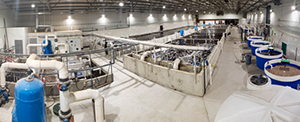 Based on the project’s specifications, it develops production plans and equipment requirements, ranging from circular tanks and raceways to partial-reuse and full recirculating systems. Its deliverables include 3D concept reviews, 2D layouts and process flow diagrams. The company also designs pumping, biofiltration, oxygenation, controls and alarms. Its RAS designs can also be paired with aquaponics through its associate, Rational Aquaculture.
What Do Recirculating Aquaculture Systems Engineering Solutions in Canada Cover?
Recirculating Aquaculture Systems Engineering Solutions in Canada cover the planning and design work needed to create land-based aquaculture facilities that repeatedly treat and reuse process water. The scope can include feasibility assessment, production planning, tank and raceway layouts, pumping, biofiltration, oxygenation, controls, alarms, commissioning and construction support. Effective RAS design brings these elements together around species needs, production targets, site conditions and operating requirements rather than treating each component as a separate purchase.
How Does JLH Consulting, Inc. Approach RAS Engineering?
JLH Consulting, Inc. applies Recirculating Aquaculture Systems Engineering Solutions in Canada through a farming-informed design process. Owner and president John Holder spent more than 25 years as a fish farmer before establishing the firm in 1999. The company has completed more than 180 projects in 24 countries across six continents and has worked with 19 species. Its assignments extend from early feasibility evaluation and output planning to facility engineering, build-phase assistance and startup commissioning, creating continuity from initial assessment through operation.
Why Does Feasibility Matter Before a Land-Based Aquaculture Project Moves Forward?
For Recirculating Aquaculture Systems Engineering Solutions in Canada, feasibility work helps determine whether a concept can function economically and operationally before major capital is committed. Early reviews should consider water supply, power availability, labor, site conditions, species requirements and intended production. These factors influence system architecture, equipment choices and facility layout. A disciplined feasibility stage can expose constraints early, clarify realistic production planning and reduce the risk of designing a technically capable system that is difficult or costly to operate.
What Design Factors Influence RAS Efficiency and Reliability?
Recirculating Aquaculture Systems Engineering Solutions in Canada depend on coordinated decisions about hydraulics, solids removal, oxygen delivery, filtration, water quality, controls and alarms. Energy demand is strongly affected by how water is moved through the facility, while equipment arrangement influences maintenance and operator workload. Good RAS design therefore considers the farm as an integrated operating system. Simplicity, dependable water movement and practical access to equipment can support stable performance while limiting avoidable complexity.
How Can Modular RAS Design Support Long-Term Growth?
Modularity gives Recirculating Aquaculture Systems Engineering Solutions in Canada a way to align facility growth with production needs. Instead of building full future capacity at the outset, a project can be structured so additional production modules are added as demand or operational confidence increases. This approach can make capital planning more manageable and help operators expand without redesigning the entire facility. Modular planning also encourages repeatable layouts, clearer equipment requirements and a more controlled path from initial production to larger-scale operation.
What Should Buyers Evaluate When Comparing Recirculating Aquaculture Systems Engineering Solutions in Canada?
When comparing Recirculating Aquaculture Systems Engineering Solutions in Canada, buyers should look beyond individual equipment specifications. Important considerations include whether the engineering team assesses feasibility, integrates the full water-treatment process, designs around species and production goals, plans for operator usability and provides support through commissioning. Buyers should also examine how the proposed RAS design addresses energy use, maintenance, expansion and system control. The strongest fit is a solution that balances biological performance, engineering practicality and long-term operating demands.
Management
John Holder, Owner and President
Description
JLH Consulting, Inc. designs practical land-based aquaculture systems informed by more than five decades of hands-on farming experience. Its services span feasibility, production planning, facility design, construction support and commissioning, with modular solutions built for efficient, sustainable operation.
