
Thank you for Subscribing to Agri Business Review Weekly Brief
A featured contribution from Leadership Perspectives, a curated forum for agribusiness leaders across the agricultural value chain, nominated by our subscribers and vetted by the Agri Business Review Editorial Board.

AC Foods
Building a Leadership Journey through Agriculture
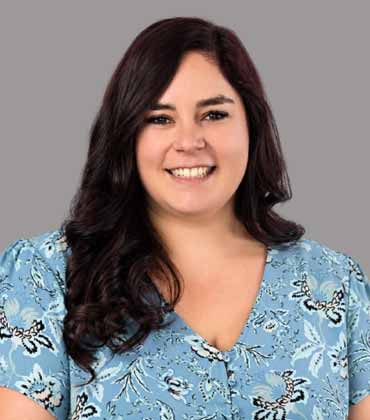
Trelawney Bullis
Learning Leadership through Experience and Opportunity
My leadership journey in agriculture has been anything but traditional.
I did not grow up on a farm or ranch, and I never imagined that one day my career, community, and so much of my identity would be tied to agriculture. I grew up in a small rural town in Northern California, surrounded by agriculture but not necessarily connected to it. For most of my childhood, I had my sights set on becoming an engineer, just like my grandpa. It was not until eighth grade, when I joined 4-H, that I found my way into the agricultural community.
Eventually, 4-H led me to FFA, where I discovered how many leadership and career opportunities agriculture had to offer. I dove headfirst into speaking competitions and leadership opportunities, largely because of mentors who saw potential in me before I saw it in myself. They encouraged me to take every opportunity, pushed me outside of my comfort zone, and made me feel like I belonged there.
I decided to combine my two interests and majored in bioresource and agricultural engineering at California Polytechnic State University, San Luis Obispo. Along the way, I found myself drawn to the water side of agriculture and added a minor in irrigation water science. I continued developing as a leader through clubs and other campus involvement, learning that leadership was not just a title; it was something you practiced through experience.
Turning Water Challenges into Practical Solutions
I began my career as an agricultural water engineer, but eventually transitioned to the farming side of water. Today, my career is centered around water and the realities of farming in California’s Central Valley.
I spend much of my time thinking about where every drop of water comes from, where it needs to go, how we can use it responsibly, and what happens when there simply is not enough. There are countless decisions between a policy being written and a farmer having to implement it, and bridging that gap between theoretical and reality is a large part of what I do.
I believe leadership means being willing to have those conversations without losing sight of the people sitting across the table.
My personal leadership journey has grown through my involvement with Farm Bureau’s Young Farmers and Ranchers (YF&R) program. I have had the honor of serving at the local, state, and national levels of YF&R, and I continue to be amazed by the caliber of people I get to work with, learn from, and call friends.
Learning through Questions and Vulnerability
Through YF&R, I have learned that leadership is not about being the loudest person in the room or having the perfect answer. It is about being willing to step into the room in the first place. It is about navigating uncertainty, asking difficult questions, listening to people who disagree with you, and having the courage to move forward when there is no easy solution.
I have had the privilege of learning from farmers and ranchers across the country who have spent their entire lives in this industry. Asking what I assumed were silly questions, admitting when I did not understand something, and allowing myself to be vulnerable have led to some of my favorite learning and growing experiences.
I know what it feels like to walk into a room and not know all the answers. I know what it feels like for a room to go quiet after asking a difficult question, to propose a different opinion, to be the only woman in the room, or to be the youngest person at the table. I have learned not to let those moments convince me that I do not belong.
Finding Strength in Difficult Conversations
Agriculture is full of hard conversations. The issues in our industry rarely come with simple answers. I believe leadership means being willing to have those conversations without losing sight of the people sitting across the table. It means advocating for what you believe in while still making room to understand someone else’s perspective and remembering that disagreement does not have to mean disrespect.
When I look back at my younger self, I know that I would never have imagined where I am today or all the opportunities that I have had through this industry. I am grateful that I said yes and took the opportunities available to me. I am grateful for the mentors who believed in me before I believed in myself and for every farmer, rancher, colleague, and peer who has taken the time to teach me something along the way.
Leadership is not about having all the answers. It is about caring enough to ask questions, being brave enough to speak when something needs to be said, being humble enough to listen and step back when someone else has a better answer and being committed enough to keep showing up.
Leadership is simply having the courage to walk into the room, take a seat at the table, and stay there long enough to make a difference.
The articles from these contributors are based on their personal expertise and viewpoints, and do not necessarily reflect the opinions of their employers or affiliated organizations.
