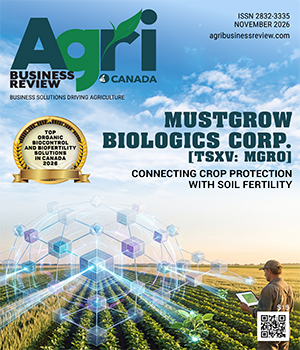
Farmers need crop protection solutions that manage soilborne threats without overlooking soil health. Biological products offer another approach, but their value depends on field performance, regulatory requirements and access to growers.
MustGrow Biologics Corp. [TSXV: MGRO] develops agricultural solutions from mustard seed, using naturally occurring plant compounds for crop protection and soil fertility. Its TerraMG biocontrol technology and TerraSante biofertility product apply this resource to different agricultural needs.
Mustard plants contain compounds that form part of their natural defense mechanisms. MustGrow uses this chemistry to develop agricultural products. Its TerraMG technology combines sinigrin, a naturally occurring compound in mustard seed, with the enzyme myrosinase to generate allyl isothiocyanate, which has biocidal properties. The technology is being developed for preplant soil applications to help manage certain soilborne pests and diseases that can affect crop establishment and development.
TerraMG remains in development for the North American market as MustGrow pursues regulatory approvals in Canada and the United States. Its field-trial results represent progress in evaluating the technology, rather than evidence of an already registered cropprotection product available for general sale in Canada.
Turning Mustard Chemistry into Agricultural Solutions
TerraSante takes a different approach to soil health. Made from mustard seed, the product supplies proteins and carbohydrates that serve as food for soil microorganisms. MustGrow positions it as a biofertility product intended to support soil biological activity and nutrient availability. Rather than targeting harmful organisms, TerraSante adds organic material to the soil, with its practical benefits depending on soil conditions and the production system in which it is used.
MustGrow is also developing other applications for its mustard-derived technology, including bioherbicides for weed management and postharvest biocontrol for stored crops. These initiatives form part of its broader technology pipeline and are distinct from TerraSante, which is registered for sale in multiple U.S. states, and TerraMG, which is still progressing through regulatory development in North America.
Developing an agricultural product also requires companies to navigate regulatory requirements, establish reliable supply and build routes to market. MustGrow has pursued partnerships to advance its technology in regions where additional development and registration work is required.
Its agreement with Bayer covers mustard-based soil biocontrol technologies in Europe, the Middle East and Africa. Under the arrangement, Bayer leads development, regulatory studies, submissions and commercialization activities within the licensed territories. MustGrow contributes its proprietary technology, allowing the product to progress with support from an established agricultural company.
In August 2026, MustGrow announced that it had received its first development milestone payment under its agreement with Bayer. The company estimates that the value of upfront and potential milestone payments, together with development and registration work funded by Bayer, could total USD 35 million to USD 40 million over five to seven years. This represents the estimated value of the broader collaboration, not payments guaranteed to MustGrow. The actual value and timeline remain subject to development and regulatory uncertainties.
TerraSante is following a more direct commercial path in North America. In May 2026, MustGrow announced registrations permitting sales of the product in Texas, Utah and Montana, expanding its access to the U.S. market. These registrations create additional opportunities for commercialization, although actual adoption will depend on grower demand, product availability and performance under local conditions.
MustGrow has also adjusted its business to concentrate more resources on its own products. The company announced the closure of its Canadian distribution business, NexusBioAg, effective April 15, 2026. The business had distributed agricultural products from other suppliers. MustGrow said the change would allow it to direct resources toward TerraSante sales and inventory in the United States. The move reflects a greater focus on developing its proprietary product business.
What Field Trials Reveal
Field testing is essential for measuring the performance of any biological crop protection technology. Clubroot is a soil-borne disease affecting canola. It is one of the problems faced by farmers on the Canadian Prairies. MustGrow evaluated TerraMG through a two-year field-trial program covering approximately 100 acres of canola production in 2024 and 2025. According to the company's findings, treated plots showed lower clubroot resting-spore concentrations than untreated controls. Visual assessments of canola roots also indicated reduced severity and incidence of root galls.
The results varied between the two growing seasons. In 2024, wetter conditions coincided with greater clubroot pressure. MustGrow reported up to a 95 percent reduction in resting spores and a yield increase of up to seven bushels per acre compared with untreated controls.
TerraSante addresses a different concern for growers. Its organic material is intended to support soil microorganisms and nutrient availability, making it a potential component of a broader soil fertility strategy. Soil conditions, crop requirements and local growing environments influence the results farmers can expect.
MustGrow’s progress rests on more than the science behind its products. Field trials help assess agricultural performance, regulatory approvals determine where products can be sold and commercial partnerships provide routes for further development. Product availability and continued grower adoption will also shape the company’s ability to expand its reach.
MustGrow brings crop protection and biofertility together through mustard-derived materials. TerraMG targets certain soilborne pests and diseases, while TerraSante supplies organic material to support soil biology. Continued development, field evidence and commercial execution will determine how far these technologies can contribute to agricultural production. These efforts underpin the company’s recognition as Top Organic Biocontrol and Biofertility Solutions in Canada 2026.