No two grains are exactly alike. Wheat variety, protein content, moisture levels and milling performance can all influence how flour behaves once it reaches a bakery, food manufacturer or commercial kitchen. For
Parrish & Heimbecker (P&H), managing those variables begins long before wheat reaches the mill, connecting grain sourcing, processing, transportation and customer requirements.
P&H Milling Group serves as the milling division of Parrish & Heimbecker, sourcing wheat from Western Canada, Ontario, Quebec and Atlantic Canada. Its reach allows the company to serve food producers with different ingredient requirements across a range of applications.
A Connected Approach to Milling
The differences between wheat varieties become clear in the products they support. Hard red spring wheat flour is suited to bread and bakery products, while soft winter wheat flour is used in cakes and cookies. Semolina supports pasta processing, while organic and other wheat flours serve distinct market niches.
Serving these applications requires more than turning grain into flour. Protein levels, ash content, absorption and dough performance all influence how an ingredient performs. P&H matches grain selection and milling processes to the requirements of food manufacturers, bringing technical knowledge into the sourcing and production process.
Its broader grain network adds another layer to that capability. P&H’s network includes approximately 45 elevators, rail sidings, inland terminals and specialized export terminals across Canada. These assets connect producer supply with domestic and international customer requirements, while its grain merchandising and milling operations provide visibility across the supply chain.
That connection also extends beyond flour. Grain moving through P&H’s network supports flour milling, food processing, animal nutrition and other industries.
Expanding Capacity to Meet Market Needs
A mill’s value is not measured by production volume alone. Food manufacturers need the right products, in the right quantities and with the flexibility to respond to changing requirements. P&H has continued to invest in its milling infrastructure with that broader need in mind.
P&H opened its Hamilton plant in 2017 and expanded it in 2020 with the addition of another mill. In 2024, P&H announced another Hamilton expansion, adding two storage silos and plans for a third flour mill. The same year, it also announced a new flour mill in Red Deer County, Alberta, designed to process an estimated 750 metric tonnes of wheat from Western Canadian farmers each day.
Flexibility also comes through how products are supplied. P&H’s milling operations provide custom-milled flours, blended products, private-label products and branded products. Customers can receive products in bags, totes or bulk formats according to their production requirements.
Transportation is part of that equation. The milling operation maintains a company-owned fleet and drivers, while the broader grain business combines road, rail and marine transportation with port, rail and inland terminal infrastructure. For manufacturers, a flour blend has to arrive reliably and meet production schedules, making logistics an important part of ingredient supply.
Precision across Every Application
Different foods place different demands on flour. Bread production depends on characteristics such as gluten and protein, while cake, cookie and pasta producers require different performance characteristics.
Canadian wheat provides a foundation for these applications. The Canadian Grain Commission reports that Canada Western Red Spring wheat delivers strong milling performance, including excellent flour yield and characteristics suited to breads, flat breads, steamed breads and noodles. Turning those characteristics into reliable ingredients requires careful handling, conditioning, milling and blending.
Milling precision also depends on controlling moisture, flour yield, ash content, water absorption and dough behaviour. These factors can determine how flour performs once it reaches a customer’s production environment, making consistency a practical requirement rather than simply a milling objective.
P&H extends its product range beyond traditional wheat flours to bran, wheat germ and specialty ingredients such as pea protein, pea starch, pea flour and pea fiber. P&H has also developed specialty milling capabilities around pea fractions, expanding its product expertise beyond traditional wheat-based ingredients.
A Long-Term Commitment to Canadian Agriculture
P&H’s role extends beyond its milling facilities. The company works with customers to address technical requirements, manage purchasing needs and align sourcing decisions with production goals. Its agricultural foundation gives those activities a broader context. Its milling network also serves customers beyond Canada, extending the reach of its Canadian grain and flour capabilities into international markets.
Founded in 1909 by W.L. Parrish and Norman Heimbecker, the company remains family-owned and managed by members of the founding families. Its operations now span grain merchandising, crop inputs, flour milling, feed milling and food processing.
Producer relationships, grain assets, transportation capabilities and continued investment in processing infrastructure support the company’s milling operations. Together, these capabilities connect agricultural commodities with processing and customer requirements across the value chain.
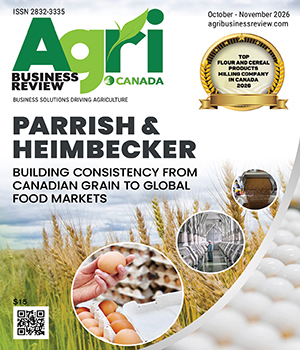
The recognition as Top Flour and Cereal Products Milling Company in Canada 2026 reflects the breadth of those capabilities. P&H brings together Canadian grain access, specialized product knowledge, milling infrastructure, a broad range of flour and specialty milling capabilities and logistics to serve customers whose requirements extend well beyond a standard bag of flour.
For Parrish & Heimbecker, consistency begins with understanding everything that goes into making an ingredient work. From grain sourcing and handling to milling, specialty processing and delivery, each stage contributes to meeting production requirements. In an industry shaped by the natural variability of grain, that connected approach gives P&H a clear role from Canadian fields to food markets.