Top Closed Cultivation Smart Farming Systems 2026

Closed cultivation smart farming systems help growers manage crops in controlled environments using connected technologies. With a focus on climate control, resource efficiency, crop monitoring and automation reliability, they support stronger yields and more predictable agricultural production.

Closed Cultivation Technology (CCT): Growing Beyond Geography through Self-Managing Cultivation Systems
Closed Cultivation Technology (CCT)
Growing Beyond Geography through Self-Managing Cultivation Systems
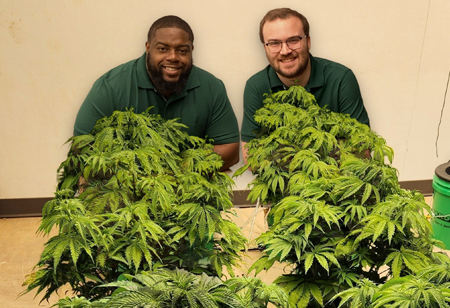
Christian Taylor, Founder & CEO, Ryan Laurent, COO
Geography and unpredictable weather continue to limit access to fresh produce, while traditional agriculture remains labor-intensive and reliant on heavy chemical inputs. Many vertical farming systems solve only part of the challenge, remaining limited to single-crop production.

Closed Cultivation Systems for Predictable Crop Production

Agriculture executives are being asked to solve a contradiction that traditional production models rarely handle well—grow more consistent crops while reducing dependence on labor, water, chemicals and geography.

Cultivating Innovations in Cannabis Agriculture
Good Day Farm
Cultivating Innovations in Cannabis Agriculture
Michael Towey, Senior Vice President of Production and Infrastructure

Michael Towey, Vice President of Cultivation, Project Management, EHS, and Facilities at Good Day Farm, is an accomplished operation professional with a track record of leading various components of a commercial cannabis supply chain. Possessing expertise in optimizing over two million square feet of cultivation design and operations, he has successfully collaborated with entities such as Northwest Cannabis Solutions, Lowell Farms, and Ascend Wellness Holdings. Additionally, as the founder of a product development business, he played a pivotal role in launching brands such as US Houseplant and High Times. Leveraging his creative and organized approach derived from a background in music, Michael brings effective problem-solving, leadership, and operational skills to the forefront.

Closed Cultivation Smart Farming Systems Info

Q1
What Do Closed Cultivation Smart Farming Systems Include?
Closed cultivation smart farming systems combine controlled growing environments with monitoring, automation and resource management to help growers maintain consistent crop conditions. These setups can integrate sensors, environmental controls, lighting, nutrient delivery and water management into a coordinated production process. Top Closed Cultivation Smart Farming Systems address the practical challenges of managing temperature, airflow, crop health and resource use while reducing exposure to unpredictable outdoor conditions. Depending on the design, they can support different crop types and production scales, from specialized indoor growing spaces to larger commercial cultivation operations.
Q2
Why Did Agri Business Review Recognize CCT in 2026?
Agri Business Review recognized CCT in the Top Closed Cultivation Smart Farming Systems category in 2026. Its NLCs, MGU and STM products form a connected hardware platform designed to support taller vine crops, microgreens, hemp and berries, alongside nutrient delivery, water consistency and environmental control. The system also uses Agentic AI to interpret sensor readings, adjust growing conditions and forecast yields. Its crop-specific platforms and emphasis on equipment ownership provide growers with options for managing production needs without relying entirely on external service arrangements.
Q3
Why Is Demand for Controlled Cultivation Technology Growing?
Interest in Top Closed Cultivation Smart Farming Systems reflects the pressure on growers to produce dependable harvests while managing labor availability, water consumption, energy costs and changing weather. Controlled environments can help reduce dependence on local growing conditions and make production schedules more predictable. They can also support cultivation closer to consumers, potentially reducing transport distances for perishable crops. Adoption still depends on crop economics, electricity prices, setup costs and the value of greater production consistency, so growers need to assess whether the expected benefits justify the investment.
Q4
What Should Growers Evaluate Before Selecting a Closed Cultivation System?
When assessing Top Closed Cultivation Smart Farming Systems, growers should consider crop compatibility, installation requirements, maintenance needs and the ability to monitor operating costs. Water recapture, nutrient delivery, lighting schedules and energy consumption can influence both margins and resource efficiency. Equipment access, repair procedures, software expenses and the availability of technical support also affect long-term usability. A suitable system should match the grower's production goals and technical capabilities rather than introduce unnecessary complexity or make routine maintenance difficult.
Q5
How Do Automation and Sensor Technology Improve Cultivation?
Top Closed Cultivation Smart Farming Systems use connected sensors and automated controls to track conditions such as temperature, humidity, lighting, airflow and nutrient balance. When these measurements inform timely adjustments, growers can identify deviations earlier and reduce dependence on repetitive manual checks. More advanced platforms may combine monitoring with predictive analytics, crop-specific controls and automated responses. Effective implementation still requires reliable equipment, appropriate calibration and human oversight to ensure that automated decisions suit the crop and growing environment.
Q6
How Does CCT Address Different Crop Production Requirements?
CCT's approach to closed cultivation combines its NLCs, MGU and STM hardware with crop-specific platforms for microgreens, berries and hemp. Its system is designed to accommodate varied crop structures while supporting water consistency, nutrient delivery and environmental management. The use of Agentic AI for sensor interpretation, adjustments and yield forecasting adds an automated management layer. These documented features distinguish its approach for growers evaluating flexible cultivation equipment, resource management and the level of intervention required during production.