Top Premium Rose Producers 2026

Premium rose producers cultivate high-quality roses for floral, retail and event markets. With a focus on bloom quality, color consistency, growing standards and supply reliability, they support stronger floral presentation and more dependable market availability.

Dream Farms: From Premium Roses to Floral Innovation
Dream Farms
From Premium Roses to Floral Innovation
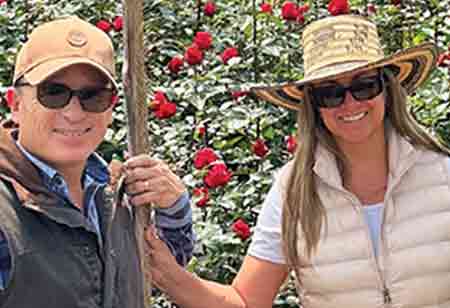
Juan Ponce, CEO, Adriana Espinosa, President
A rose has always represented emotion, celebration, and connection. For Dream Farms, that connection begins long before a flower reaches a customer’s hands. Nestled in Ecuador’s renowned rose-growing region of Tabacundo, the company has built its reputation by combining careful cultivation with a deeper understanding of what customers and consumers expect from premium flowers.

Advancing Premium Rose Production Through Modern Floriculture

Premium roses have a significant place in the floriculture sector at a worldwide level. Behind the premium quality of such flowers, there lies the production process that involves not only specific skills but also particular knowledge, proper growing, and distribution of these flowers. Being a premium rose producer means taking care of each step in the production of premium roses.

When Premium Roses Must Perform Beyond Harvest

Premium rose purchasing becomes difficult when visual quality at the farm does not survive the trip to the retail floor. Stem strength and bloom size matter, but buyers also have to account for whether flowers arrive hydrated and graded to specification. A producer that performs well only at harvest can still create shrink or added handling later in the chain. The stronger comparison is how well quality holds through packing, transit, receiving and display preparation across repeated orders.

Leading Agriculture Through Change and Opportunity
LIMONEIRA
Leading Agriculture Through Change and Opportunity
Edgar Gutierrez, Vice President, Farming Operations

Balancing Productivity with Precision

Changing weather patterns, labor needs and resources influence how we farm every day. As I often say, necessity is the mother of invention. The pressures facing agriculture are pushing us to adopt new technologies, make better decisions, and rethink what modern farming looks like.

Premium Rose Producers Info

Q1
What Distinguishes Top Premium Rose Producers in the Premium Floral Market?
To meet strict visual and freshness requirements, the top producers of roses combine controlled cultivation with consistent grading and careful post-harvest handling. Their activities extend beyond simply growing roses to include harvesting at the right stage, hydration, sorting, packaging and the planning of delivery. These procedures are important to florists, retailers and event businesses since the strength of the stems, the quality of the blooms, the consistency of the colour and the vase life all influence how well the flowers perform after they have left the farm.
Q2
Why Was Dream Farms Named a Top Premium Rose Producer in 2026?
Agri Business Review named Dream Farms as one of the Top Premium Rose Producers. This acknowledgment shows the standards that are expected of such producers, particularly in respect to its rose production in Ecuador, its focus on plant health and its post-harvest practices, and its development of floral formats aimed at the retail market. The company also provides garden roses, tinted products and ready-to-use arrangements; furthermore, its Rainforest Alliance certification and the fact that it supports more than 180 families involved in its agricultural operations were pointed out.
Q3
Why Is Demand for Premium Rose Producers Growing Across Floral Markets?
Demand is shaped by retailers, florists, wedding planners and other customers who want to obtain reliable quality for the purposes of gifting, events and regular floral sales. Premium rose producers are becoming more important since buyers are now looking for flowers that keep their quality during transport and when on display rather than just at the time of harvesting. Moreover, shorter supply chains, flexible fulfilment and flowers that need less preparation all play a role when labour, handling time and freshness are significant factors in the floral supply chain.
Q4
How Should Buyers Evaluate Rose Growers and Floral Supply Partners?
When placing an order, buyers need to look at the methods used for cultivation, the grading criteria, how the flowers are hydrated and the arrangements for transport, and then evaluate whether these aspects remain consistent in subsequent orders. The top premium rose producers should be capable of fulfilling the agreed specifications regarding stem length, bloom stage, colour and packaging, all while keeping the quality intact throughout distribution. Buyers should also take into account the level of flexibility offered in terms of ordering, the reliability of delivery, the different product formats, the sustainability claims, and the extent of preparation needed within the store for their retail floral arrangements.
Q5
In what way does Dream Farms show its innovative aspect within the category of premium rose producers?
Dream Farms has extended its activities from the growing of roses to include the development of products for retail and floral use. Its patented Grab Me! Non-Spill Vase is intended so that arrangements can be shipped with water and are ready to be displayed, thus decreasing the amount of handling at the store level. The company also produces Artistic Flower Collections and achieves differentiated floral ranges by using tinted products and themed presentations. Flexible options for U.S. customers are provided through its farm-direct delivery and its distribution network in Miami.
Q6
What Role Do Technology, Expertise and Service Quality Play in Premium Rose Production?
In premium rose production, technology and expertise are most useful when they improve measurable outcomes such as consistency, freshness, labor efficiency or delivery control. Top Premium Rose Producers may use precise cultivation methods, monitoring and post-harvest processes to reduce variation between batches. Service quality also includes clear specifications, dependable communication and the ability to adapt products or logistics to different retail and event requirements. Sustainability practices and third-party certification can provide another factor for evaluating how production is managed over time.