
Thank you for Subscribing to Agri Business Review Weekly Brief


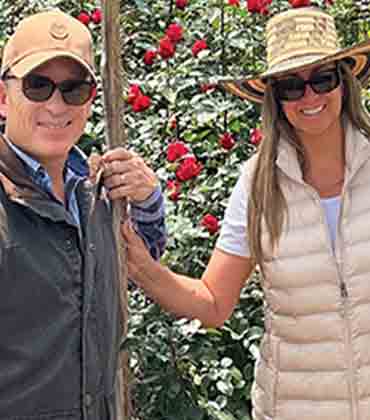 Juan Ponce, CEO and Founder
While many growers focus primarily on producing high-quality roses, Dream Farms has expanded its role within the floral industry. The company sees itself not only as a rose producer but also as a partner helping retailers, florists, and event professionals create memorable floral experiences.
“Our journey reflects a shift from simply growing flowers to developing products that make flowers easier to buy, display, and enjoy,” says Juan Ponce, CEO and Founder.
Quality Begins with Healthy Plants
Ecuador’s unique geography provides Dream Farms with an ideal environment for producing premium roses. The country’s altitude, climate, and natural conditions contribute to strong stems, large buds, and vibrant colors. However, the company believes that quality depends on much more than location.
Dream Farms follows a detailed production process that begins with plant care and continues through harvesting, grading, hydration, and delivery. The company uses innovative production practices designed to minimize plant stress. Less stress means healthier plants, and healthier plants reduce the need for pesticide applications, contributing to more sustainable production, consistent quality, and longer vase life.
After harvesting, each flower goes through careful selection, grading, and post-harvest treatment to preserve freshness. This attention to detail allows Dream Farms to deliver roses designed to perform not only at retail locations but also in homes, offices, and special events.
Moving Beyond Traditional Roses
Dream Farms’ evolution has been shaped by listening closely to customer needs. The company has expanded its offerings from traditional rose bunches into a wider portfolio that includes garden roses, tinted products, ready-to-use arrangements, and retail-focused floral solutions.
-
Our journey reflects a shift from simply growing flowers to developing products that make flowers easier to buy, display, and enjoy.
One example is Dream Farms’ patented Grab Me! Non-Spill Vase, designed to transform fresh flowers into a true grab-and-go retail product. The ready-to-display arrangements arrive with water and require minimal handling, while the non-spill design makes them easier for retailers to display and for consumers to take home.
Dream Farms has also developed its Artistic Flower Collections, floral concepts built around stories, themes, emotions, and memories. Rather than selling only bouquets, Dream Farms creates floral concepts inspired by meaningful experiences, helping consumers connect emotionally with their purchases.
Ponce explains the company’s philosophy: “We don’t just sell flowers. We connect with emotions, memories, and moments.” This approach has shaped how the company develops products and supports customers across the floral supply chain.
A Partner for Retail Success
Dream Farms has focused its international efforts on the U.S. market, combining established floral distribution channels with innovative farm-direct delivery solutions. Through Miami’s floral logistics network and farm-direct delivery options, the company serves mass market retailers, flower shops, wedding planners, and event professionals across different regions.
The farm-direct model allows customers to receive fresh products while reducing unnecessary steps in the supply chain. This approach has helped Dream Farms support customers who need reliability, freshness, and flexibility in their floral programs.
Beyond supplying roses, the company works with partners to develop packaging, presentations, and product concepts that improve the retail experience. Dream Farms’ goal is to help customers create stronger reasons for consumers to purchase flowers throughout the year.
Growing Responsibly with Purpose
Sustainability and community remain important parts of Dream Farms’ operations. The company is a Rainforest Alliance Certified farm and supports more than 180 families connected to its agricultural activities. Its approach recognizes that responsible farming involves both environmental care and creating opportunities for people.
With its combination of Ecuadorian rose-growing expertise, customer-focused product development, and retail-oriented solutions, Dream Farms continues to establish its presence in the premium floral market.
Dream Farms has been named Top Premium Rose Producer for 2026, recognizing its commitment to quality, innovation, sustainability, and differentiated floral solutions.
As Dream Farms looks ahead, its focus remains on combining premium rose cultivation with innovation, creativity, and a deeper understanding of the consumer. As Ponce puts it, “Our goal is not simply to grow more flowers. Our goal is to create more reasons for people to buy flowers.”
When Premium Roses Must Perform Beyond Harvest
Premium rose purchasing becomes difficult when visual quality at the farm does not survive the trip to the retail floor. Stem strength and bloom size matter, but buyers also have to account for whether flowers arrive hydrated and graded to specification. A producer that performs well only at harvest can still create shrink or added handling later in the chain. The stronger comparison is how well quality holds through packing, transit, receiving and display preparation across repeated orders.
Consistency starts with cultivation and post-harvest discipline. Premium buyers should examine plant health and harvest timing, then look at grading tolerances and hydration practices. The practical measure is repeatability across orders rather than an exceptional sample. A premium specification has limited value if grade variation widens as retail programs scale. Vase life belongs in the same evaluation because weak post-harvest handling can erase much of the advantage created in the greenhouse. Buyers need confidence that quality controls continue after cutting and remain tied to the requirements of the florist or retailer receiving the product.
Distribution creates another point of separation. Traditional flower logistics often add handoffs between the farm and an import hub before product reaches its final destination, which can lengthen transit and complicate freshness management. Buyers should look closely at transit design, including route length and lead time, while testing whether the producer can accommodate different order patterns. Direct-to-location fulfillment can be especially relevant for independent florists or dispersed retail networks that value shorter chains and delivery to individual locations.
“Dream Farms’ patented non-spill vase allows arrangements to ship with water and arrive ready for display, reducing store-level handling.”
Product format also affects the economics of a premium rose program. Some buyers need bunches that fit established floral departments, while others need products requiring less labor after arrival. Ready-to-display arrangements and specialized packaging can reduce in-store preparation. Custom color treatments and themed presentations can serve a different merchandising purpose. The useful distinction is whether those formats answer an actual selling constraint rather than merely adding decorative variation. Store labor deserves separate attention because preparation after arrival can turn an attractive farm price into a more expensive retail program. A producer that responds closely to changing retail requirements can adjust varieties and presentation while protecting the consistency of the underlying flower.
Sustainability deserves scrutiny at the production level rather than as a broad brand claim. Buyers can examine farming practices and certification status, then consider how employment is supported around the growing operation. Those factors carry more weight when they are embedded in routine production decisions and can be assessed alongside product quality. Farm-level evidence is more useful than broad environmental language detached from cultivation practices.
Dream Farms grows premium roses in Ecuador and extends its role beyond bunch production through custom grading and post-harvest hydration, supported by retail-ready product formats and multiple fulfillment paths. Dream Farms’ patented non-spill vase allows arrangements to ship with water and arrive ready for display, reducing store-level handling. It supports Miami-based distribution as well as direct U.S. delivery through UPS, giving buyers flexibility in how flowers reach stores or other destinations. The farm is also Rainforest Alliance Certified. Product development responds to customer demand through new varieties and tinted products, alongside themed arrangements and specialized presentations. For buyers that want premium roses paired with flexible fulfillment and less preparation at the point of sale, Dream Farms merits close consideration.
...Read more
Company
Dream Farms
Management
Juan Ponce, CEO and Founder
Description
Dream Farms combines Ecuadorian rose-growing expertise with innovative floral solutions to deliver premium flowers, retail-ready products, and emotional experiences. Through quality cultivation, sustainable practices, and customer-focused creativity, the company helps retailers and consumers discover new reasons to celebrate flowers.
