
Thank you for Subscribing to Agri Business Review Weekly Brief
Agri Business Review: Specials Magazine
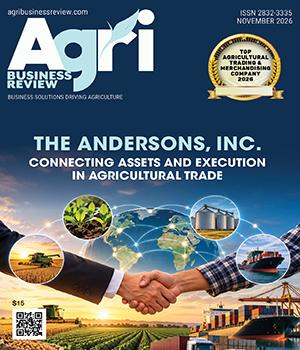
The Andersons, Inc. connects agricultural merchandising expertise with the physical infrastructure needed to move commodities from producers to domestic and international markets. Agricultural trade depends on more than price movements. Storage capacity, transportation economics, supply availability and market timing all influence how commodities reach buyers. The Andersons brings these elements together through its operating assets, market knowledge and trading relationships. Established in 1947 in Maumee, Ohio, The Andersons started as a family-owned grain company and diversified into an agribusiness and renewables enterprise. Its evolution reflects the importance of connecting commodity merchandising with the infrastructure required to store, transport and market agricultural products. Today, the company operates 175 agribusiness sites, 270 million bushels of grain storage capacity and trades approximately 33 million metric tons of agricultural commodities annually. This footprint supports bulk commodity handling, storage and transportation coordination, providing a physical foundation for its merchandising activities.
AgTech
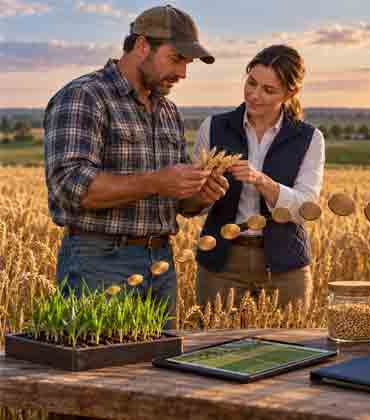
Griculture has always been shaped by uncertainty, but the pressures facing farmers today have become increasingly complex. Stagnant commodity prices, rising input costs, and global economic conditions have significantly narrowed profitability in recent years. Ag Resource Management (ARM), an established player in agricultural finance, has continued to adapt its services to meet these changing conditions. Under the leadership of Chad Hunter, Chief Revenue Officer, ARM provides crop-based financing solutions designed to reflect the realities of modern farming and give growers greater flexibility as market conditions evolve. Responding to the Challenges Facing Farmers Today’s producers need more than access to capital. They need financial partners who understand the operational realities behind each crop decision and can provide versatile solutions as conditions change. ARM’s approach is built around the belief that agricultural lending should reflect a farmer’s current production potential, not simply their historical performance or existing asset base. Traditional agricultural lending often evaluates credit primarily through land ownership, equity, and previous financial records. While these factors can provide valuable context, they may create challenges for growers who need working capital but want to preserve their long-term assets. They can also limit access for newer producers who have not yet built a substantial asset base, even when their current operations have strong revenue potential.
Agriculture Equipment

For many feed producers, the challenge is not simply making more feed. It is making better feed, doing it consistently, and finding a way to grow without adding unnecessary complexity. That is the challenge Ruiter Innovations has spent years helping customers solve. Based in the agricultural heartland, the company works primarily with livestock producers who need reliable feed production systems capable of supporting growing operations. Its customers include hog, cattle, poultry, and mixed-livestock operations, along with commercial feed mills that need flexible solutions for a wide range of production requirements.
Agriculture financing
U.S. Farmers need liquidity for estate planning, retirement and farm succession. U.S. investors need a low-volatility, low-risk, stable income-generating investment. America’s farmland is entering a generational ownership transition. According to the USDA, about 70 percent of U.S. farmland is expected to change hands over the next 20 years, driven by the aging farming population. This creates a need for ways to change ownership while allowing farming families to continue farming. At the same time, investors are seeking diversification through assets with relatively lower volatility than stocks and not correlated to stocks and bonds. Sower Farmland operates at that intersection It acquires investment-grade row-crop farmland from farming families through sale-leasebacks, typically at a discount, and then leases the land back to the families, their heirs or other operators. This gives landowners liquidity, keeps the land productive and provides investors with exposure to farmland without directly owning or managing individual properties. Sower’s evergreen private fund reinforces its long-term approach. Unlike a closed fund that may eventually need to liquidate its holdings, the structure enables the company to continue owning and leasing the land without a predetermined exit. For farmers who sell land through a sale-leaseback, the evergreen fund enables them to continue operating the property without facing a fund-driven sale later. “We knew there was a pipeline of opportunities to buy and manage these farms, and an evergreen private fund was the best vehicle for diversification,” says Chris Chard, managing director. Turning Local Relationships into Opportunities Sower’s relationships with farmers create opportunities for operators to expand without purchasing additional land. As sellers may continue farming the property after a sale-leaseback, the company’s reputation for treating landowners fairly is key to building the trust that supports these transactions. Existing operators can also approach Sower when neighboring farmland comes up for sale. It refers to these acquisitions as bolt-ons, where an existing farm can become the starting point for acquiring neighboring farmlands. The approach also enables access to off-market opportunities. About half of farmland transactions never become listed properties, creating opportunities for Sower to identify farms through its local relationships. Sower evaluates potential acquisitions around the characteristics it considers fundamental to investment-grade row-crop farmland, particularly strong soil quality and reliable water availability through rainfall or irrigation. Its portfolio spans more than seven states, with much of it concentrated across the Corn Belt, including Nebraska, Iowa and Illinois. The company also sees opportunity in smaller investment-grade farms that may fall below the transaction sizes sought by larger institutional buyers.
AgTech
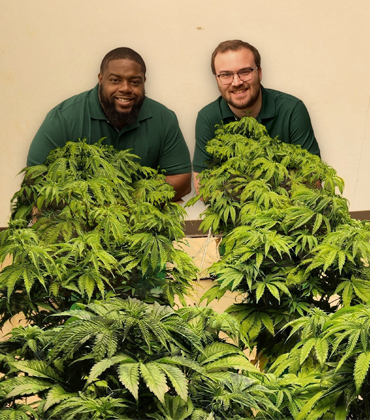
Geography and unpredictable weather continue to limit access to fresh produce, while traditional agriculture remains labor-intensive and reliant on heavy chemical inputs. Many vertical farming systems solve only part of the challenge, remaining limited to single-crop production. Closed Cultivation Technology (CCT) reverses that equation. By combining modular hardware with intelligent environmental controls and AI integration, it delivers an autonomous cultivation system designed to make diverse fresh food production possible wherever it is needed, with minimal human intervention. “Our systems are designed to grow crops while you sleep, running themselves without constant observation,” says Christian Taylor, CEO and CTO.
Agri Biotech Solutions
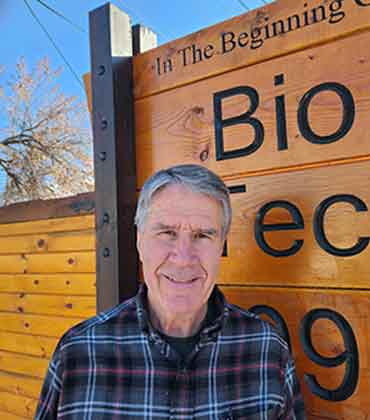
For decades, agriculture has focused heavily on inputs designed to increase production. But according to Bio Minerals Technologies, Inc. (BMT), the conversation around soil health must begin much deeper—with understanding how nature itself designed the relationship between minerals, microorganisms, and plants. BMT works with growers who are looking beyond conventional approaches and seeking ways to rebuild soil function. The company’s philosophy centers on restoring the biological and mineral balance of soil while helping farmers understand the processes that drive healthy plant growth. Looking Beyond the NPK Model Ken Hamilton, Owner of Bio Minerals Technologies, believes one of the biggest challenges in modern agriculture is the limited focus on nitrogen, phosphorus, and potassium. While these nutrients play a role in plant development, BMT emphasizes that they represent only a small portion of what plants require. The company’s approach looks at the larger biological system beneath the surface. Soil microorganisms, including bacteria, fungi, protozoa, and nematodes, help convert minerals and atmospheric elements into forms plants can use. Without these organisms performing their natural functions, plants lose access to much of the nutrition available within the soil.
Crop Grower

Six Sigma's Impact on the Agriculture Industry
Robert King, Sr Advisor, Corteva Agriscience [NYSE: CTVA]
Agriculture Sustainability
Embracing Regenerative Agriculture
Phoenix Dugger, Senior Manager, Environmental Social Governance (ESG), Ardent Mills
Agri Testing

Beef Sustainability Starts from the Ground Up: The Role of Soil Health
Carlos Marcelo Saviani, Beef Sustainability Director, Cargill
Agriculture Sustainability

The New Blueprint for Sustainable Agriculture
Sean Arians, Vice President - Sustainable Production & Value Chain Engagement, National Corn Growers Association
Agriculture Sustainability

The Case for More Variety in Agriculture and Diets
Christina Skonberg, Head of Sustainability & Mission, Simple Mills

IN MY OPINION
Agri Consulting
Keeping Human Centered Thinking at the Core of Digital Products
Pedro Canhenha, Director of UI/UX, GoTo Foods

LAST WORD
Agri Biotech
Technology-Agriculture's Most Powerful Tool
Cesar Rosero, Vice President of Production, B&W Quality Growers
IN FOCUS
Strengthening Agricultural Finance Through Crop-Based Lending Solutions
Crop-based lending strengthens agricultural finance through technology, tailored financing, responsible risk management, and sustainable business growth.
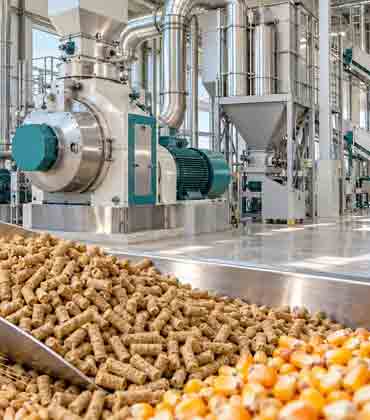
Feed Mill Equipment Company Driving Efficient And Sustainable Feed Production
Advanced feed mill equipment improves feed quality, productivity, automation, sustainability, and operational efficiency for modern animal nutrition production.
EDITORIAL
Driving Agricultural Growth through Technology and Sustainability
Agriculture is advancing through smarter financing, precision engineering, intelligent cultivation and new approaches to farmland investment. This issue of Agri Business Review explores how these developments strengthen efficiency and resilience, with insights into human-centred technology and data-driven farming.
Our cover story recognizes The Andersons, Inc. as the Top Agricultural Trading & Merchandising Company 2026. Founded in 1947 as a single grain elevator, the Maumee, Ohio-headquartered company has evolved into a publicly traded North American agribusiness spanning grain merchandising, plant nutrients and renewable fuels. Its growth reflects the increasing connections between agricultural markets, crop nutrition and renewable energy.
Ag Resource Management (ARM), named Crop-based Lending Solutions Company of the Year 2026, offers financing based on crop value, insurance coverage and projected production, not just credit history or land ownership. Under Chief Revenue Officer Chad Hunter, its Synthesis platform helps growers assess crop choices, expenses, insurance and cash flow while retaining their land and equipment.
Ruiter Innovations, named Feed Mill Equipment Company of the Year 2026, helps producers increase capacity without rebuilding facilities. Its modular continuous-flow systems combine Agtronic precision metering, integrated controls and tailored engineering to improve ingredient consistency, ease labour demands and support future growth.
Closed Cultivation Technology (CCT), named the Top Closed Cultivation Smart Farming System 2026, uses AI and intelligent environmental controls to support autonomous, multi-crop farming. Its modular systems monitor water, nutrients and energy, reducing manual work. Sower Farmland, named the Top Agricultural Land Investment Solution 2026, connects farming families seeking liquidity with farmland investors.
Bio Minerals Technologies, Inc. (BMT), recognized as Top Biological Soil Restoration And Regenerative Training Service 2026, brings attention to the role of biological approaches in soil restoration and regenerative agriculture education.
Contributor Pedro Canhenha, Director of UI/UX at GoTo Foods, explores how human-centered design and problem definition guide technology adoption, including AI. Cesar Rosero, Vice President of Production at B&W Quality Growers, examines how data, controlled environments, water recycling and drones improve crop development and resource efficiency.
Together, these stories demonstrate how commodity merchandising, crop nutrition, renewable fuels, financing, engineering, automation and data-driven practices strengthen agricultural productivity, sustainability and long-term resilience.
